Buy Once or Buy Again: Why Solid Wood Furniture Beats MDF
Why Investing in CNC-Crafted Wood Furniture Just Makes Sense
Let’s be honest, most of us have bought that “quick fix” piece of furniture at some point. It looks good online, the price feels right, and two days later you’re sitting on the floor surrounded by confusing instructions, a tiny Allen wrench, and about 47 identical screws. You get it together, it does the job… for a while.
And then something starts to give. A joint loosens. A panel warps. Maybe it survives one move, maybe it doesn’t. Eventually, it ends up exactly where a lot of that furniture ends up: on the curb or in a landfill.
That’s the cycle a lot of big-box, ready-to-assemble furniture is built around. It’s fast, it’s cheap, and it’s not really meant to last.
Now compare that to a piece made from real wood, cut and crafted with CNC (Computer Numerical Control) machinery. It’s a completely different category of product, and once you understand why, it becomes pretty obvious that “spending more” is actually just spending smarter.
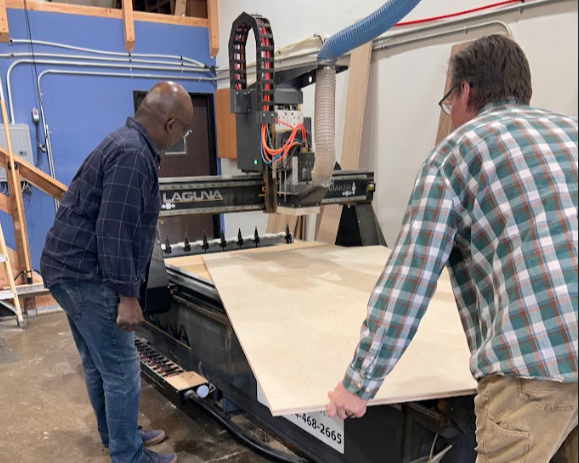
Precision That Actually Matters
CNC machinery isn’t just about fancy tech, it’s about consistency and precision. Every cut is exact. Every joint fits the way it’s supposed to. There’s no guesswork, no warping from uneven cuts, and no “close enough” assembly.
What that means in real life is simple: things line up, things stay tight, and the structure holds up over time.
With a lot of mass-produced MDF furniture, tolerances are looser. Pieces are often designed to be forgiving because they have to be assembled quickly by the end user. That’s why you get wobbles, gaps, or that subtle “this doesn’t feel solid” feeling right out of the box.
CNC-crafted wood pieces don’t rely on that kind of compromise. They’re designed to fit together cleanly and stay that way.
Real Wood vs. Engineered Shortcuts
MDF (medium-density fiberboard) is essentially wood fibers glued together under pressure. It’s smooth, uniform, and inexpensive, which is why it’s used everywhere. But it has some real limitations.
It doesn’t handle moisture well. It’s prone to chipping and swelling. And once it’s damaged, there’s really no fixing it. You can’t sand it down and refinish it in a meaningful way. You can’t repair structural damage. When it goes, it goes.
Solid wood is a different story entirely.
It can handle wear. It can be refinished. It can be repaired. It ages in a way that actually adds character instead of just looking worn out. And when it’s paired with precise CNC cutting, you get the best of both worlds: natural material with modern accuracy.
That combination is what gives a piece staying power.
Built to Survive Real Life
Furniture doesn’t live in a showroom. It lives in homes, garages, workshops, and spaces where things get used, bumped into, moved around, and occasionally abused.
A well-built wood piece can take that.
You can tighten hardware. You can refinish surfaces. You can even modify it over time if your needs change. It’s adaptable in a way that mass-produced furniture just isn’t.
MDF furniture, on the other hand, tends to have a shorter lifecycle built in. Once a cam lock strips or a panel cracks, it’s usually not worth the effort to fix. It’s faster and cheaper to replace it, which is exactly what the industry is counting on.
The Hidden Cost of “Cheap”
That lower price tag is appealing, no question. But it’s only cheaper if you buy it once.
If you replace a $150 piece three times over a few years, you’ve already spent more than you would have on something solid from the start. And that doesn’t even factor in the time, frustration, and repeat assembly process.
There’s also the intangible cost of living with something that never quite feels sturdy or finished. It does the job, but it doesn’t add anything to the space.
When you invest in a well-made wood piece, you’re paying upfront for something you don’t have to think about again. It just works, and it keeps working.
Environmental Impact
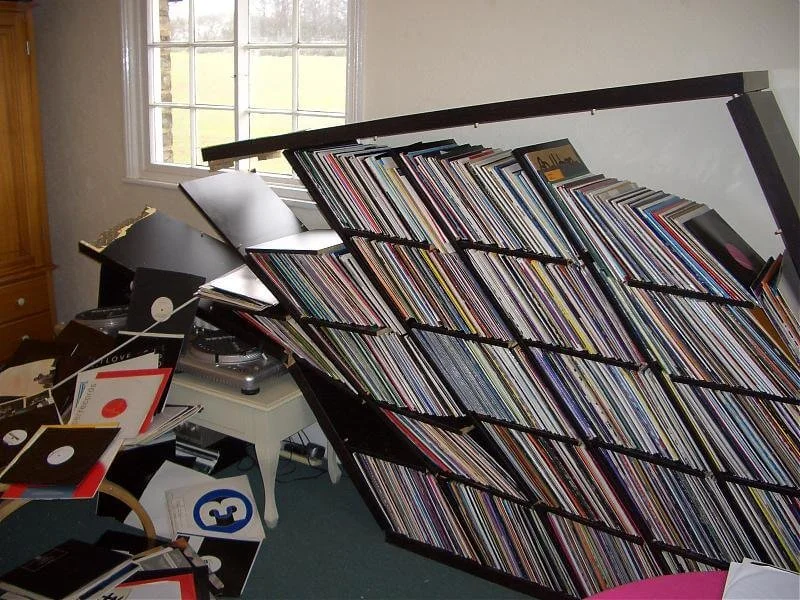
A huge amount of ready-to-assemble furniture ends up in landfills. Not because people don’t want it, but because it simply doesn’t hold up. Once it breaks, it’s difficult or impossible to repair, and often not recyclable due to adhesives, laminates, and mixed materials.
Better for the Environment (Without the Greenwashing)
This is where things get real.
A huge amount of ready-to-assemble furniture ends up in landfills. Not because people don’t want it, but because it simply doesn’t hold up. Once it breaks, it’s difficult or impossible to repair, and often not recyclable due to adhesives, laminates, and mixed materials.
So it gets tossed.
Solid wood furniture, especially when built well, stays in use much longer. It can be repaired, refinished, or repurposed instead of discarded. That alone dramatically reduces waste.
There’s also something to be said for buying fewer things overall. A single piece that lasts 10 or 15 years has a much smaller environmental footprint than cycling through multiple disposable pieces in that same timeframe.
This isn’t about perfection or purity. It’s just about durability. And durability, by default, is more sustainable.
Customization That Actually Means Something
One of the biggest advantages of CNC-crafted wood pieces is the ability to customize.
You’re not stuck choosing between three finishes and two sizes. You can dial in dimensions that fit your space, select colors that match your style, and even tailor functionality to how you actually use the piece.
Want a cabinet that works as both a whiskey setup and a dartboard enclosure? Done. Need a tool organizer that fits your specific gear? No problem.
That level of flexibility just doesn’t exist with mass-produced furniture, where everything is standardized to keep costs down.
It Just Feels Different
There’s also a less tangible factor here, but it matters.
Well-made wood furniture has a presence. It feels solid when you touch it. Doors close with intention. Shelves don’t sag. It doesn’t rattle or shift when you move it.
You don’t have to convince yourself it’s good enough. It just is.
And over time, that feeling adds up. It changes how a space feels, whether it’s a living room, a workshop, or a garage.
So… Is It Worth It?
If you’re only looking at the price tag, maybe not.
But if you’re looking at how long something lasts, how it performs, and how often you’ll need to replace it, the answer shifts pretty quickly.
CNC-crafted wood furniture isn’t about being fancy. It’s about being practical in a longer-term way. It’s choosing something once instead of choosing something over and over again.
And honestly, it’s about getting out of that frustrating cycle of assemble, use, break, replace.

What are your expectations?
If you’re looking at how long something lasts, how it performs, and how often you’ll need to replace it - sometimes spending more once is more efficient than replacing lesser quality items over and over again.
Quick Takeaways
CNC precision means tighter joints, better fit, and longer-lasting construction
Solid wood is repairable, refinishable, and more durable than MDF
MDF furniture is often not built to last and rarely repairable
“Cheap” furniture usually costs more over time due to replacements
Durable pieces reduce landfill waste and are a more sustainable choice
Custom sizing and finishes allow furniture to actually fit your life
Well-made wood furniture simply feels sturdier and more reliable
At the end of the day, it comes down to this: you can buy furniture for right now, or you can buy furniture that sticks around. The price difference is real, but so is the difference in what you get for it.